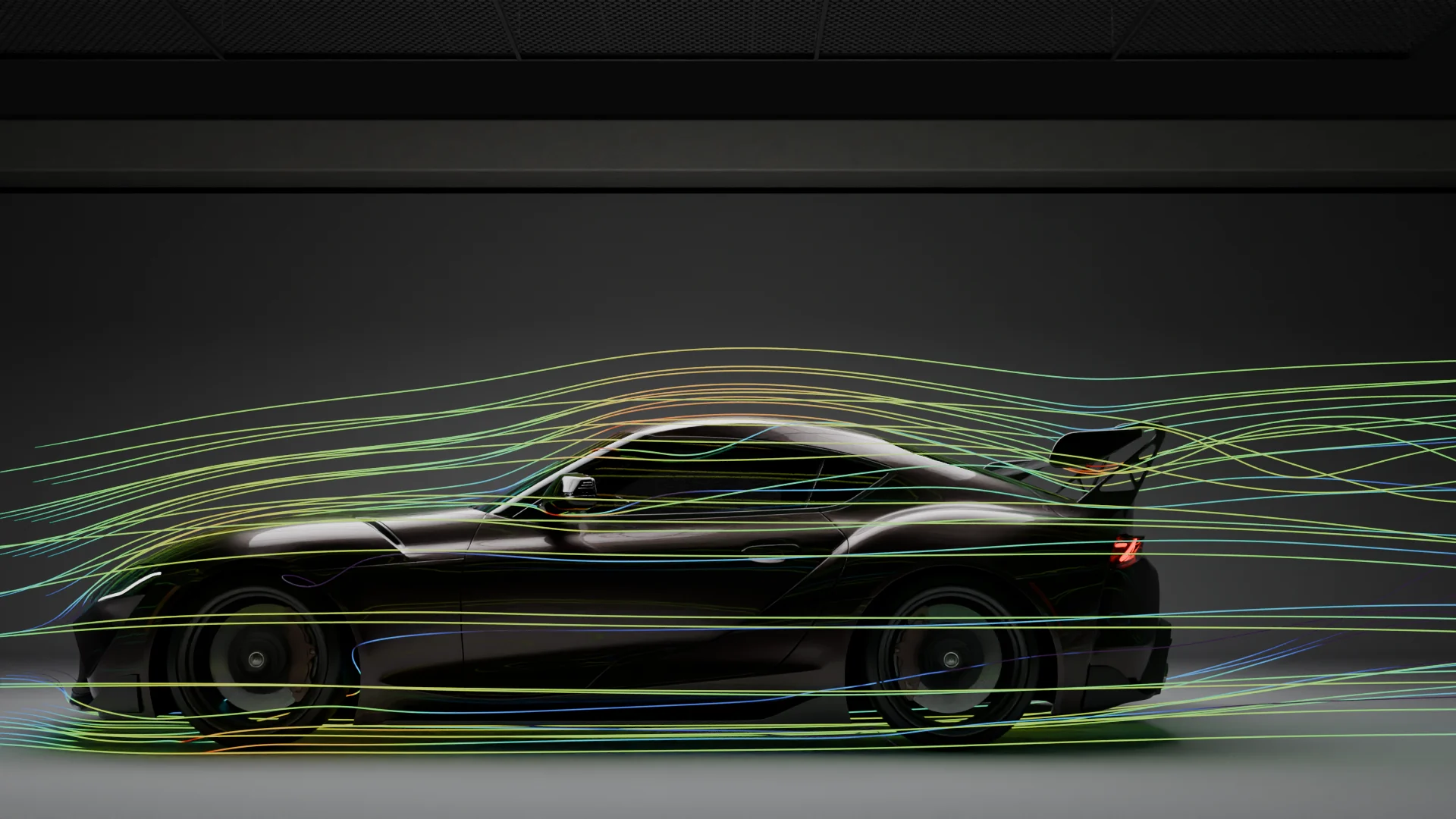
Aerodynamics or dark magic?
Three forces, one compromise.
At high speeds, every car displaces a lot of air. How that air flows over the body, through the wheel arches and under the floor decides whether the car generates lift or downforce.
Downforce is only half the story. Almost anything that creates downforce also adds drag. Then there is balance: a shift between the front and rear axle directly changes turn-in behavior and stability. More downforce therefore does not always mean proportionally more performance. What matters is the right balance for the greatest possible performance gain.
- Downforce
- The force pressing the car onto the road, giving the tyres more grip.
- Drag
- The force holding the car back and costing lap time.
- Aero balance
- How downforce is split between the front and rear axle.
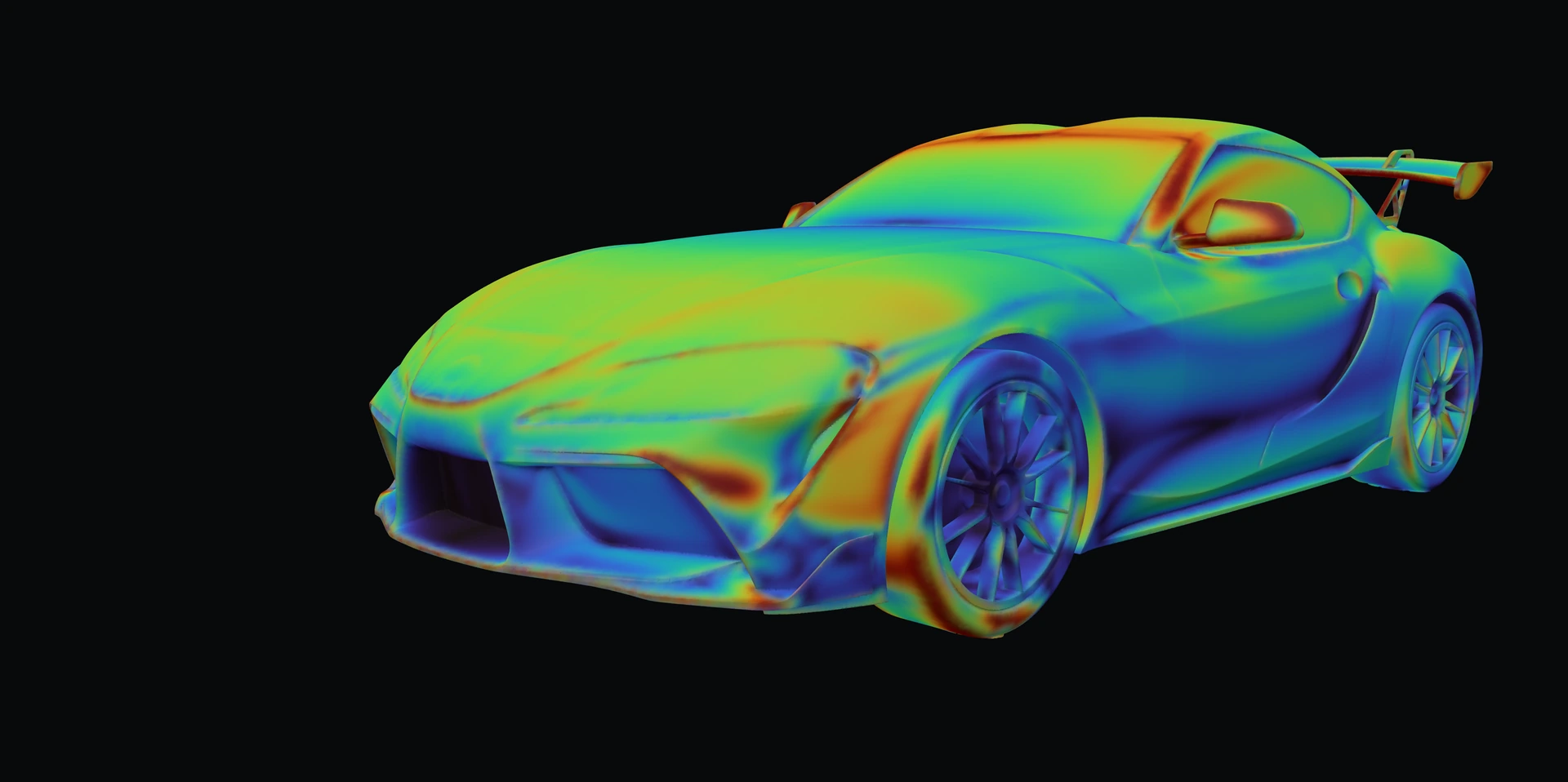
A simulation only becomes a tool once it matches the measurements.
We run every idea through a CFD simulation before a single part gets made. That saves time and resources, but only if the CFD delivers reliable results.
A simulation can go wrong in many places: the computational mesh, the turbulence model, the assumptions about the surroundings. Often only a trained eye can spot it in the finished image.
Our simulation grew out of academic research into airflow around vehicles and was validated against measurements in the Pininfarina wind tunnel. That comparison shows what the simulation results are really worth. Without it, they would just be colorful pictures.
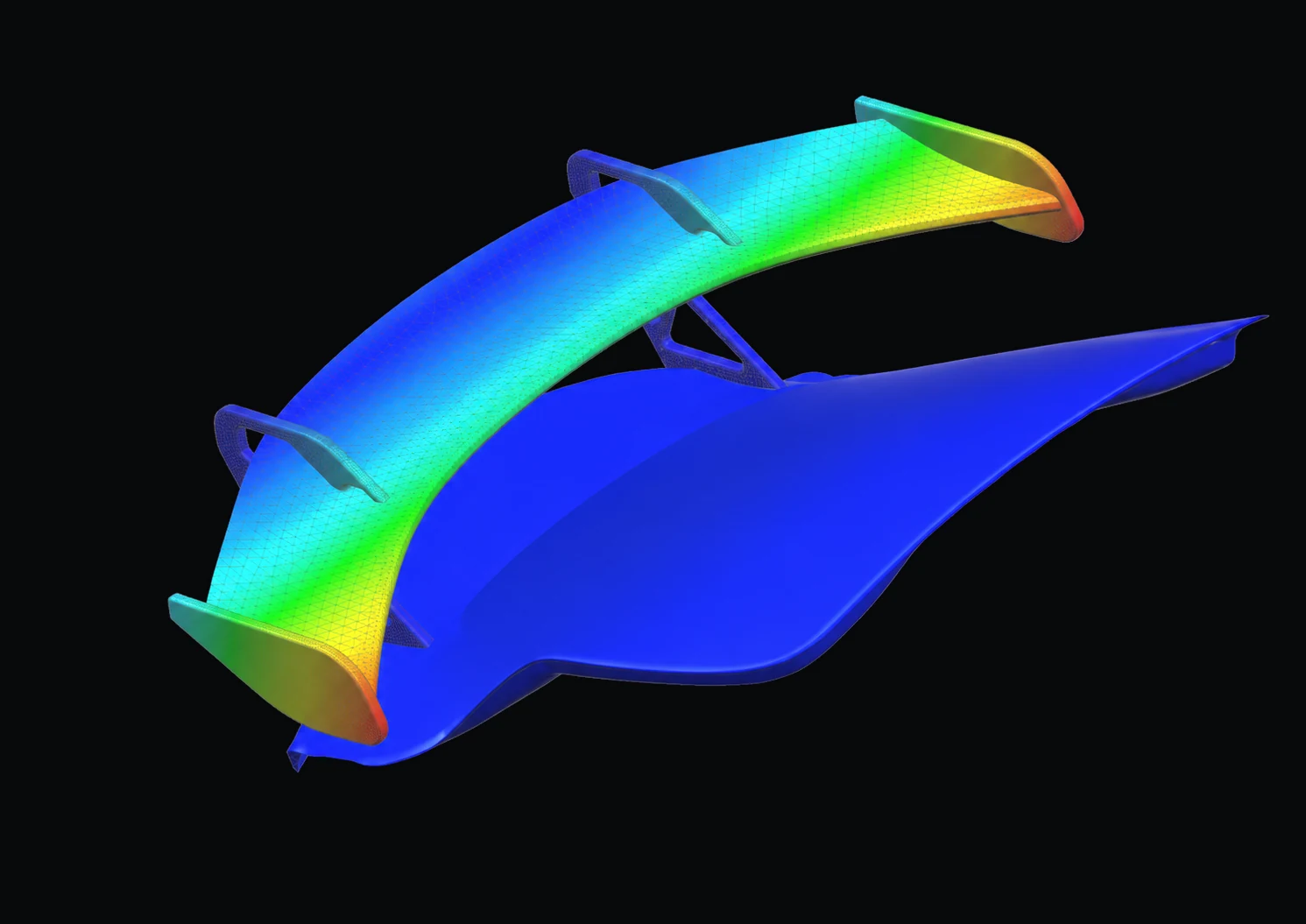
Structural design with FEA.
Every aerodynamic force has to be absorbed by the vehicle. Add vibration, bumps and changing temperatures – lap after lap.
With finite element analysis (FEA), we examine the stresses and loads that occur. Building on that, we develop mounts and load paths that channel the forces into the body in a controlled way.
Because every gram has to serve a purpose. And every structure its task.

Prepreg carbon, cured in an autoclave.
Our carbon parts are made by a specialist manufacturing partner. We rely on prepreg, the highest-quality and most precise process in carbon processing. The carbon fibres come pre-impregnated with a precisely measured amount of resin, so the ratio of fibre to resin is right in every part. They are laid into the mould layer by layer and then cured in an autoclave under vacuum and external pressure at high temperature. The result is light, stiff and consistent parts of the highest manufacturing quality.
And the numbers?
How much downforce, how much drag, what balance: we'll publish those figures once the parts are close to prototype production.